Dadong Site
Introduction
The Dadong Site, located in Helong city, Jilin province, China, is a significant archaeological site dating back to the late Paleolithic period, approximately 50,000 to 15,000 years ago. Spanning an area of about 4 square kilometers, with a core area exceeding 500,000 square meters, it is the largest open-air site of its kind in Northeast Asia. The site is renowned for its rich cultural remains, including nearly 20,000 lithic tools and animal fossils, which provide valuable insights into the evolution, migration, and cultural exchanges of early humans in the region. The Dadong Site is particularly notable for its clear cultural sequence and the development of microblade technology, marking it as a key location for understanding the prehistoric era in Northeast Asia.
Archaeological Discoveries
Excavation Process
The archaeological exploration of the Dadong Site has been conducted in multiple phases, beginning with its discovery in 2007. The first formal excavation occurred in 2010, uncovering initial evidence of human activity. Since 2021, led by the Jilin Institute of Cultural Relics and Archaeology and Liaoning University, a renewed focus on the site has led to more systematic studies, involving advanced archaeological techniques and interdisciplinary collaboration. Researchers have meticulously excavated the site, uncovering a wealth of artifacts and fossils that have significantly enriched the understanding of the late Paleolithic period in Northeast Asia.
Key Findings
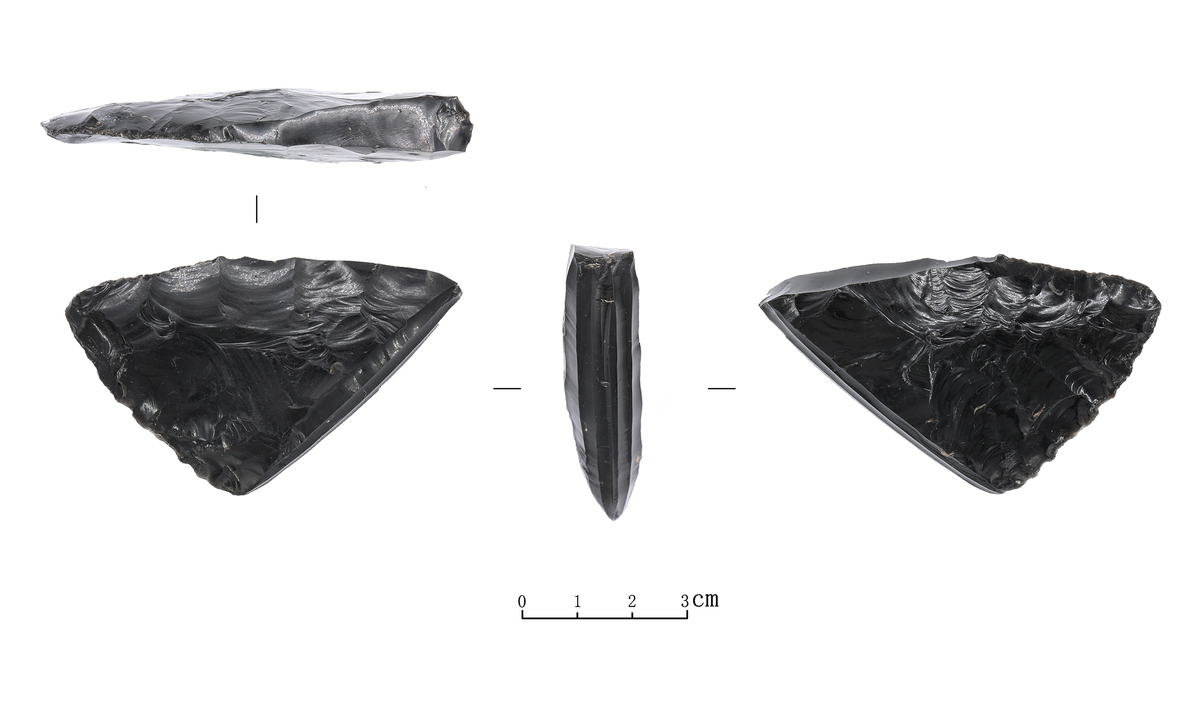
The Dadong Site has yielded nearly 20,000 stone tools and animal fossils, categorized into three distinct cultural stages. The first stage, dating back 50,000 to 30,000 years ago, revealed simple lithic cores and flakes, along with numerous animal fossils. The second stage, from 28,000 to 24,000 years ago, saw the emergence of blade and microblade tools, indicating a significant advancement in stone tool technology. The third stage, spanning 17,000 to 15,000 years ago, featured microblade tools, showcasing the site's role in the development and spread of this technology. The discovery of obsidian tools, a volcanic glass material, further underscores the site's importance, as it represents one of the earliest uses of this material in Northeast China.
Cultural Significance
The Dadong Site holds immense cultural and academic significance. It provides clear evidence of the technological evolution of stone tools over a span of 50,000 years, marking the transition from lithic flakes to blades and microblades. This transformation reflects broader patterns of human adaptation, innovation, and cultural exchange during the late Paleolithic period. The site's location in the Changbai Mountain area highlights its role as a hub for the origin and spread of microblade technology in North China. Furthermore, the discovery of obsidian tools demonstrates the existence of complex social networks and material exchanges among prehistoric communities in Northeast Asia. The site's findings also contribute to the understanding of the migration and interaction of early human populations across Asia and into the Americas.
Preservation and Protection
Efforts to preserve and protect the Dadong Site have been ongoing since its discovery. The site's large size and rich cultural remains make it a valuable resource for archaeological research and cultural heritage. Measures have been implemented to safeguard the site from environmental and human-induced threats, ensuring its long-term preservation. Collaborative efforts between local authorities, academic institutions, and cultural heritage organizations have been instrumental in maintaining the site's integrity and promoting its significance on a global scale.
Tourism and Promotion
The Dadong Site has the potential to become a major tourist attraction, offering visitors a glimpse into the prehistoric past of Northeast Asia. Educational programs, guided tours, and interactive exhibits can help raise awareness about the site's historical and cultural importance. By promoting sustainable tourism, the site can serve as a platform for cultural exchange and learning, while also contributing to the local economy. Efforts to enhance public engagement and accessibility will further solidify the Dadong Site's status as a key destination for archaeology enthusiasts and history lovers.








